
Mobile Shop Software: Billing, IMEI Tracking, Warranty and Udhar in One Place
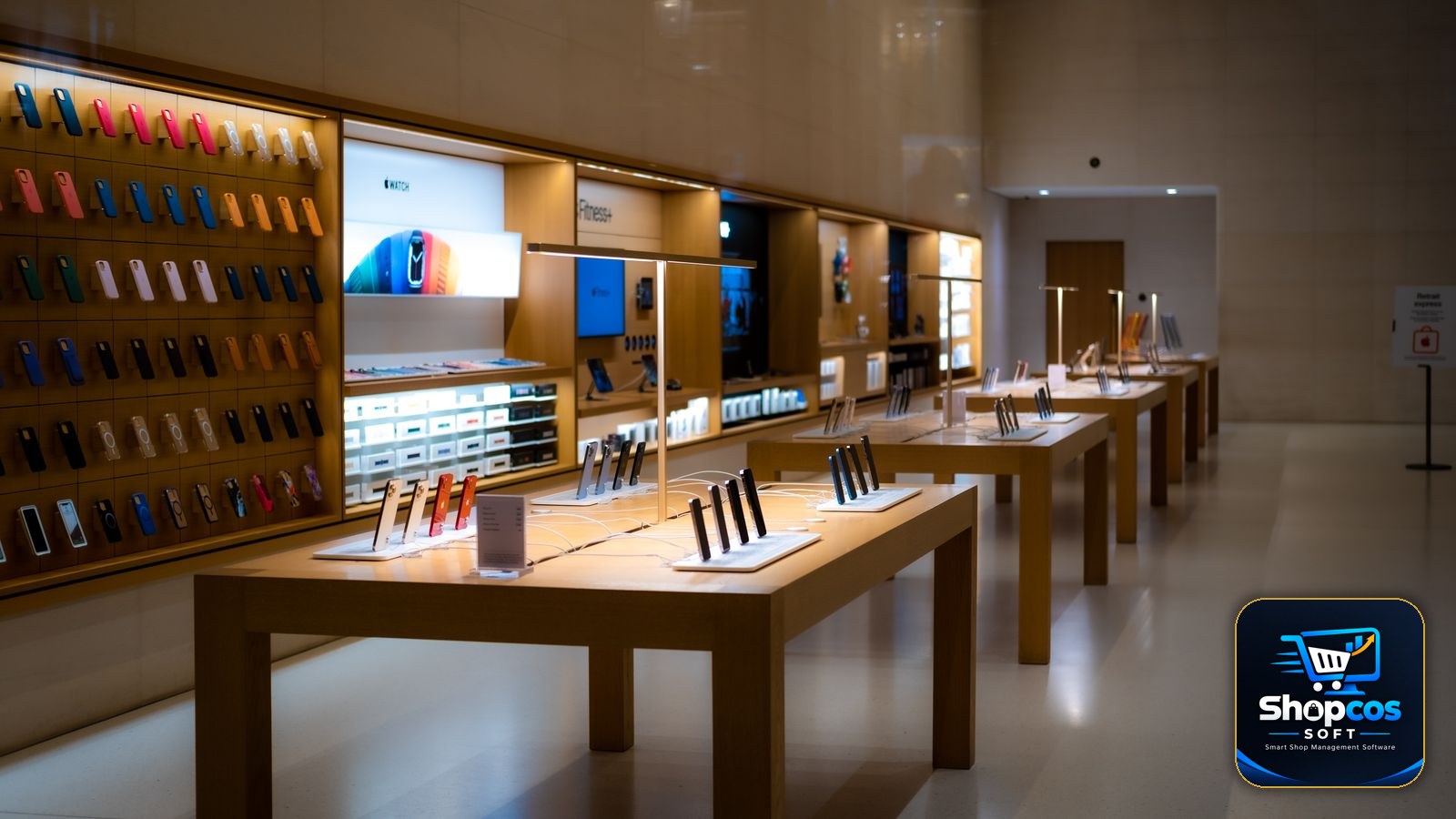
Every other shop on your street sells quantities. A kiryana store sells fifty identical packets of tea; if one goes missing, the loss is a few hundred rupees and nobody can tell which packet it was. Your shop sells individuals. Fifty handsets in your glass counter are fifty separate assets — each with its own IMEI number, its own purchase price, its own warranty clock already ticking, and a value between fifteen thousand and three lakh rupees. Lose track of one unit and you have not lost a packet of tea. You have lost a month of accessories profit.
That single difference is why generic billing software so often disappoints mobile shop owners, and why searching for mobile shop software — or "mobile shop ka software", as most owners type it — lands you on page after page of vendors all claiming to be built exactly for you. Some are. Some are ordinary billing programs with the word "mobile" pasted on. This guide is the neutral version those pages will not give you: what a phone shop actually needs from its software, feature by feature, and the tests to run before any money changes hands — whichever system you end up buying, ours included.
Why a Mobile Shop Breaks Normal Billing Software
A mobile shop is not one business. It is four businesses sharing one counter. There is the new handset business: serialized, high-value, low-margin, where the exact unit matters more than the count. There is the accessories business: hundreds of small items — covers, chargers, handsfree, protectors, memory cards — sold fast and in volume. There is the repair bench: other people's phones in your custody, faults to record, parts consumed, promises about dates. And there is the used-phone trade: buying handsets from walk-in customers, with real money and real legal risk attached.
On top of all four runs a fifth thread: credit. Regular customers take small udhar daily, take accessories on account, and increasingly take handsets on installments. Ordinary billing software sees none of this structure. It sees quantities going up and down. The features below are what "mobile shop billing software" has to mean in practice before the label deserves your money.
1. IMEI-Wise Stock: Every Handset Is Its Own Record
The heart of mobile shop software is IMEI-wise stock. When a carton of handsets arrives, each unit should enter the system as its own record: brand, model, variant (RAM and storage), color, IMEI 1 and IMEI 2, the purchase price of that unit, the supplier it came from, and the date it arrived. Not "Samsung A16 — quantity 12". Twelve separate phones that happen to share a name.
This matters more than it first appears. Two lots of the same model rarely arrive at the same price; a unit bought in March and an identical unit bought in June can carry margins a thousand rupees apart. If your software stores one average rate, your profit reports are fiction. When a sale happens, the bill should capture the IMEI being sold — typed or scanned — so that exact record leaves stock, with its real cost attached. Three everyday problems die the day this works properly: the customer who returns claiming you sold him a different unit than the one in his hand; the "missing" phone that turns out to have been sold by a staff member without a bill; and the shelf of slow units you cannot identify because the system only knows a total count, not which phones have been sitting for ninety days eating your cash.
The two-unit test: enter two units of the same model bought at different prices. Sell one by IMEI. If the software cannot show you the remaining unit's own cost and the sold unit's exact margin, it is counting phones, not tracking them — and counting is not enough at these prices.
2. Warranty Tracking by IMEI
Four months after a sale, a customer comes back: the display has lines on it, and he is certain "you people gave warranty". Was it a one-year brand warranty or a seven-day shop checking warranty? When exactly did he buy it? Which supplier did the unit come from, because your own claim runs upstream to them? In a register-based shop this means twenty minutes of page-flipping while the customer heats up. In IMEI-tracked software it is one search: the IMEI on the phone in his hand pulls up the purchase date, the warranty terms recorded on that bill, and the supplier — in seconds, in front of him.
Two habits make this work. First, the warranty terms should print on the customer's bill at sale time, so the promise is written, not remembered differently by each side. Second, the warranty record must hang on the IMEI, not just the bill number, because the customer will never bring the bill — he will bring the phone. Be suspicious of any system that can only find a sale by invoice number. Phones carry their identity on them; your software should use it.
3. Used-Phone Purchases: The Record That Protects You
Buying used phones from walk-in customers is some of the best margin in the trade — and the only part of your business where a single bad purchase can bring the police to your counter. When a stolen handset surfaces, the first shop in the chain that gets visited is yours. The difference between a shopkeeper treated as an honest buyer and one treated as a suspect is, almost always, paperwork.
A proper used-phone purchase record captures, at the moment of purchase: the seller's full name, CNIC number, mobile number, the phone's IMEI, the agreed price, and honest notes on condition — plus the seller's signature or thumb impression on a printed purchase slip or affidavit-style undertaking kept with your records. Software that supports this treats a used purchase as a first-class entry, not a negative sale squeezed into a billing screen. It also pays commercially: each used unit enters stock with its own cost and condition, so when it resells you know the true margin on that phone, not a monthly guess. If a system you are evaluating cannot record who sold you a phone, it is asking you to carry the legal risk personally. Decline politely.
4. Repair Jobs: A Job Card, Not a Sticky Note
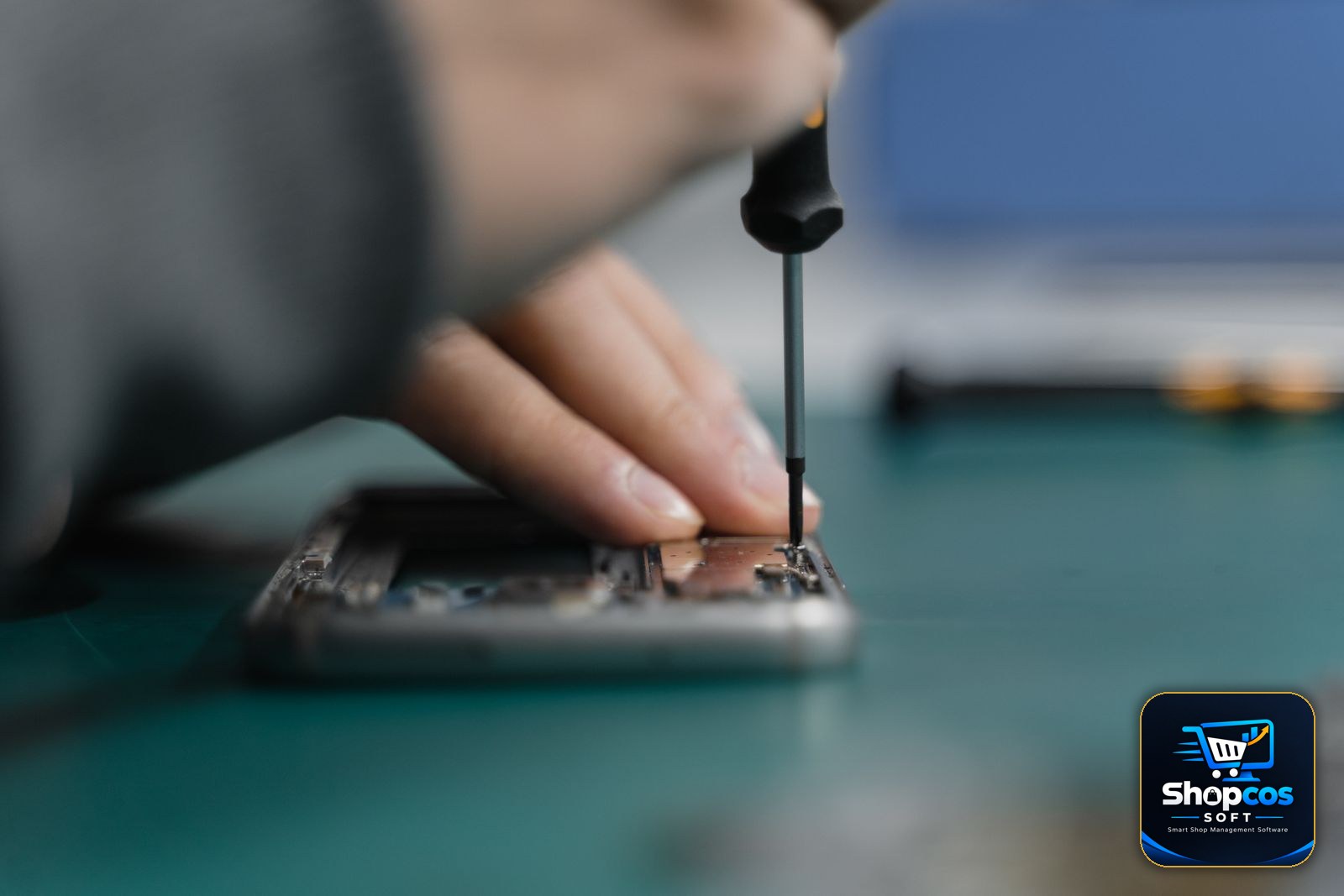
The repair bench runs on trust and memory, and memory is where the money leaks. Good mobile shop software gives every repair a job card the moment the phone crosses your counter: customer name and number, handset and IMEI, the fault as the customer describes it, the phone's physical condition on arrival (the cracked back cover noted before your technician opens it), the estimate quoted, and the promised date. That condition note alone ends the oldest argument in the trade — "this scratch was not there when I gave it."
From there, the job should move through visible states — received, in repair, ready, delivered — so that when the customer calls, anyone at the counter can answer in seconds instead of hunting for the one boy who knows. Parts consumed (a display, a battery, a charging port) should come out of your stock as they are used, which makes repair profit real instead of assumed, and a simple report of unclaimed phones — devices sitting ready for thirty days — turns forgotten repairs into phone calls that clear your shelves. When the job closes, the final bill should carry the job number and the IMEI, so a warranty argument about the repair itself, two months later, starts from a record and not from somebody's recollection.
5. Accessories: Small Tickets, Serious Volume
Accessories quietly pay the rent in most mobile shops, and they are where slow billing hurts most. A customer buying a cover and a protector will not wait while you type names into a list of four hundred near-identical items. This side of the counter needs barcode-fast billing — scan, beep, bill — with the discipline our barcode system guide for small shops lays out, plus combo billing that puts a handset, its cover and its protector on one invoice without three separate searches.
Stock discipline matters differently here: not per-unit identity, but velocity. Which covers fit the models actually selling this month? Which charger brand comes back faulty? When did handsfree last sell, and why are there sixty in the drawer? The right reports make a weekly ten-minute review possible; without them, accessories stock becomes a museum of last year's models. And note the connection nobody prices in: when the matching cover is out of stock, customers regularly buy the phone somewhere else too. An accessories stock-out can cost a handset sale.
6. Udhar, Installments and the Regulars
A mobile shop's khata is not background noise; it is a sales tool. The same regular who takes a handset on installments also takes small udhar through the month, buys accessories on account, and sends his family to your counter because his name is honored there. All of that should live in one ledger per customer, so the answer to "how much does Ahmed owe us, in total, across everything?" is one number, not four notebooks.
Look for per-customer credit limits that warn before a sale crosses them, payments recorded against specific bills rather than floating in memory, and statements the customer can actually read — a dated, itemized khata statement sent on WhatsApp settles more quiet disputes than any argument at the counter, as our guide to running a khata book on PC explains in depth. For handset installments specifically, the schedule belongs inside the same ledger: agreed installments, dates, and what remains — visible to you and, when needed, showable to the customer.
The 9-Point Checklist Before You Pay
Bring this list to every demo, including ours. A vendor who welcomes these questions is telling you something; so is one who changes the subject.
- Per-unit serial/IMEI field on product records — not a remarks box, a real field you can search and report on.
- Per-unit purchase rates, so two lots of the same model keep their own costs and margins.
- Warranty lookup by IMEI, with the warranty terms printable on the sale bill.
- A used-phone purchase entry that records seller name, CNIC, phone number and IMEI.
- Repair job cards tied to the handset's IMEI, with status tracking from received to delivered.
- Barcode-fast accessories billing that stays fast at rush hour, not just in the demo.
- One khata per customer with credit limits and itemized WhatsApp statements.
- Fully offline billing — load shedding and dead internet do not stop your counter.
- An honest price model — monthly rent forever, or one payment that ends? Do the three-year maths before the trial, not after the first renewal.
Then run the real trial test: enter twenty handsets with IMEIs, fifty accessories, three repair jobs, two used-phone purchases and one udhar customer with an installment plan — using your own data, at your own counter. If that takes longer than an afternoon, daily life with the system will not be easier than the register was. Our honest comparison of billing software in Pakistan applies this same standard across the wider market, not just to phone shops.
Where shopcos soft Fits — Honestly
Our own software is a general shop system, not a mobile-only specialist tool, and this guide would fail its own test if it pretended otherwise. Here is the accurate picture. In shopcos soft, every product record carries a batch/serial field and a generic-name field alongside its own purchase and sale rates — most phone shops use that serial field to hold the IMEI, which keeps each handset's cost, its bill and its record attached to the individual unit, the way section one of this guide demands. Repair work is billed in the same ledger — parts out of stock, labour as a service line — so the money side of the bench is never separate from the shop's real accounts. The khata is per-customer with WhatsApp statements, backups are taken automatically every day, billing runs 100% offline on the shop's own PC, and the interface is fully in Urdu for counter staff.
If your shop sells only handsets and your entire day is IMEI-in, IMEI-out, dedicated mobile-shop systems exist and you should trial them side by side with everything else — that is what the checklist above is for. But the common Pakistani mobile shop is handsets plus accessories plus repair plus load and udhar, and for that shop one honest system that keeps every rupee in one ledger usually beats three disconnected apps that each know a third of the truth.
The Bottom Line
The question to ask of any mobile shop software is not "does it make bills?" — everything makes bills. It is "does it know which phone this is?" IMEI-wise stock, warranty answered from the handset itself, used purchases with the seller's identity attached, repair jobs with a paper trail, accessories at barcode speed, and one ledger for every rupee a regular owes you. Judge every demo — ours included — against those six things with your own data in the trial, and the right choice tends to make itself obvious.
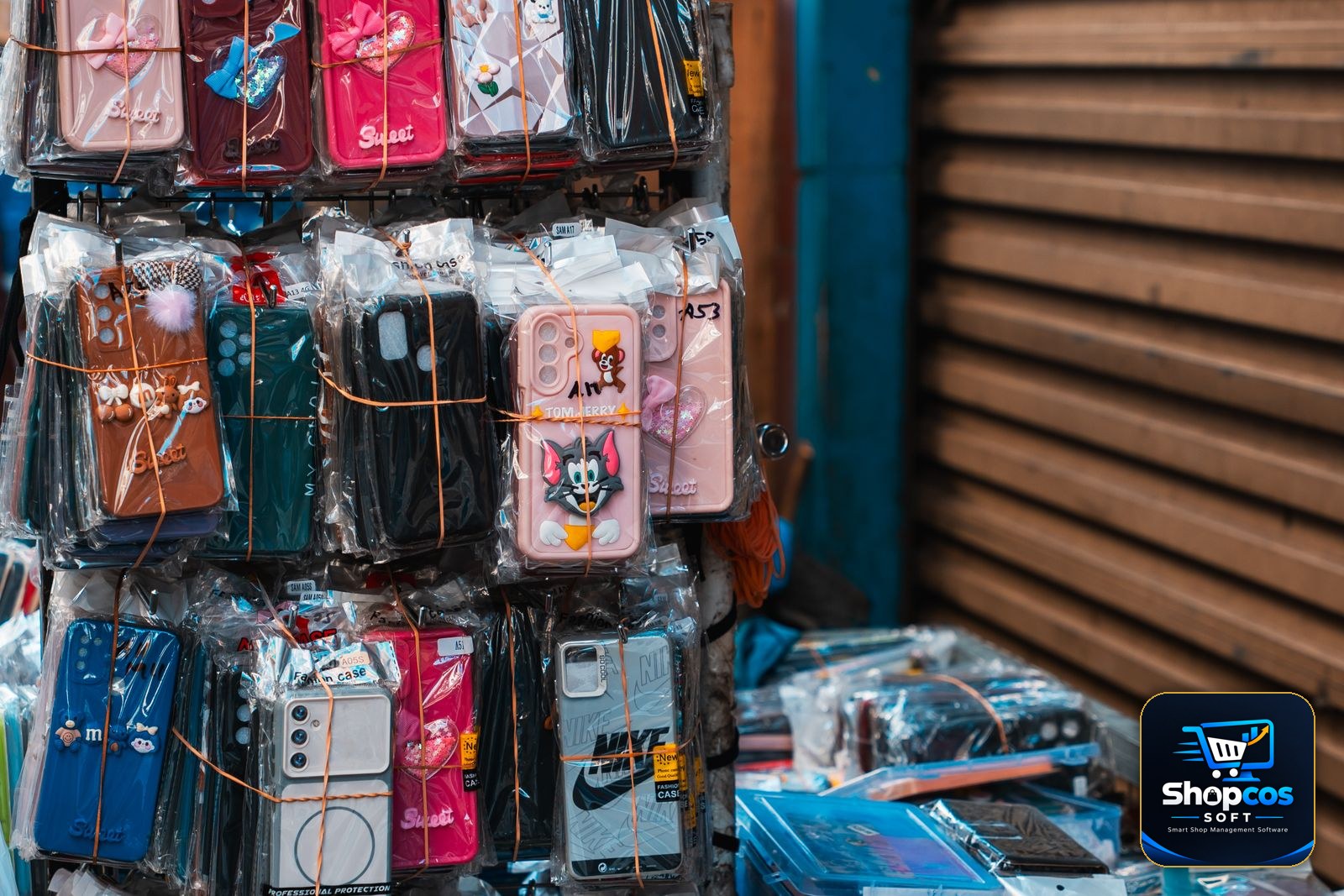
Photo credits: A mobile phone shop interior with handsets on display tables photo by Mathias Reding · A smartphone being repaired with a screwdriver photo by Tima Miroshnichenko · Colorful phone accessories at a street market stall photo by Thilina Alagiyawanna — all via Pexels.
One ledger for handsets, accessories, repair and khata.
shopcos soft: Rs 40,000 one-time (lifetime license), billing, stock and digital khata in one system that runs on your own shop PC — per-item serial/batch fields and rates, WhatsApp statements, automatic daily backups, per-cashier logins, 100% offline billing, full Urdu interface, and WhatsApp support in your language. Try it free for 30 days before you spend anything.
Start 30-day Free TrialQuestions? WhatsApp us: 0326 4025618